Darui Electric recommends
The power supply busbar device can be used for electric hoists, electric beam and electric single-girder bridge cranes; stackers, automatic inspection lines for electromechanical products, automated production lines, mobile power tools and other mobile power receiving equipment, as well as fixed busway installations in factories, mines, workshops, and office areas.
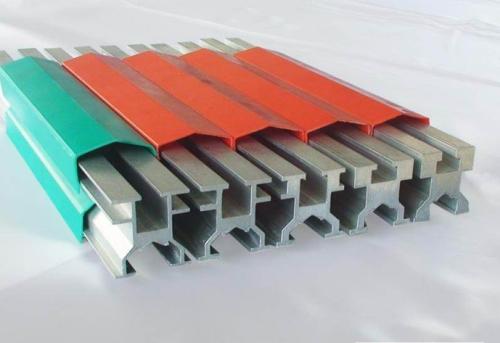
Currently, single-pole H-type safety busbar is widely adopted, which has significant improvements in protection level and insulation, making it safe and reliable.
Safety busbar - used in dusty, humid environments, can be equipped with dustproof sealing strips and hand protection (when the busbar is very close to people, hand protection should be provided, such as akapp). The collector speed is less than 300 meters per minute.
Multi-pole busbar - easy to install, fast speed, simple and compact structure, safe and reliable, suitable for currents below 100A commonly used.
Rigid busbar - used for high-current equipment, currents can reach several thousand amperes, suitable for harsh environments and high temperatures.
Single-pole busbar - combined according to different pole numbers, currents can also reach thousands of amperes, it is the most commonly used busbar.
The quality of the busbar can be measured according to the following standards:
1. Carbon brush service life - it is a consumable item, and the travel distance affects the equipment maintenance cycle.
2. Busbar shell quality - thickness, hardness, applicable temperature, environment, etc.
3. Collector performance - mainly from the wheel service life, turning wheel design, and whether the collector can be used in various environments.
4. Busbar expansion issue - expansion must be considered when the length exceeds 100 meters.
5. Voltage drop issue - the voltage drop varies according to the length of various copper strips.
In order to ensure the normal operation of the busbar and extend its service life, regular maintenance should be carried out after the busbar is put into operation.
1. Carbon brushes: Should be checked every 1-3 months according to the usage of the mobile equipment. Focus on checking the wear of the collector carbon brush. If the wear amount is ≥5mm, it must be replaced. If the carbon brush is found loose or worn unevenly during inspection, the cause should be identified and handled promptly.
2. Collectors: Should be checked at least once per quarter. Focus on checking whether fasteners are loose or displaced, and the wear of plastic parts and moving parts. Check the spring tension (the contact pressure between the collector brush and the guide rail should maintain a certain pressure (see table below). Handle any problems promptly.
3. Connectors: Should be checked at least once per year. Focus on checking whether fastening bolts, welds, and support parts are loose, corroded, or displaced. Handle any problems promptly.
4. Daily inspection: Focus on checking whether the straightness of the track has obvious deviation (greater than 20mm), misalignment, whether the insulating protective parts are detached, broken, or damaged, whether the stainless steel "v" groove is warped; whether there are foreign objects and conductive dust on the track. If necessary, check whether the insulation resistance meets the requirements (the insulation resistance between phases should be ≥5MΩ).
Especially for environments with large deviations in the overlap, gauge, and inclination of the crane track, frequent use, excessive dust in the workshop, high temperature, and environments with water, acid, alkali, mist, and outdoor use, daily inspection and maintenance must be strengthened.
Before installing the busbar, first fix the angle steel bracket according to the installation form selected by the user and the suspension spacing of the busbar. At the installation site, put the required suspension seats on each 6-meter busbar, and one joint protective cover at each end. Also install one aluminum joint at one end. When installing the aluminum joint, note that only 1/2 of the aluminum guide rail should be inserted into the joint, leaving the other half for connection with the next guide rail. After the above preparations are completed, hang the busbars one by one on the bracket and connect them all. When connecting, tighten the screws of each joint. If the total length of the busbar exceeds 200 meters, an expansion device should be installed (our factory supplies expansion devices at any time). When connecting the incoming power line, it can be connected at the joint of each 6-meter section.
Note: The above information and technical parameters are compiled and released by Yangzhou Darui Electric Co., Ltd.