Dary Electric recommends
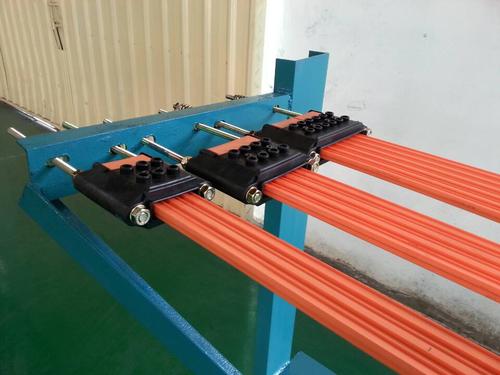
The single-pole combined trolley wire HXPnR-M, HXPnR-C, HXPnR-Ω series are composed of M-type, C-type, Ω-type copper conduits with matching PVC insulating sheaths, external current collectors, and corresponding brackets, end caps, bell mouths, joint slides, and other components.
C-type and M-type trolley wire current collectors HXPnR-M, HXPnR-C, HXPnR-Ω series single-pole combined trolley wires are composed of M-type, C-type, Ω-type copper conduits with matching PVC insulating sheaths, external current collectors, and corresponding brackets, end caps, bell mouths, joint slides, and other components. This product, with its small size, compact structure, stable performance, and flexible combination, is widely used in conveyor lines and inspection lines in industries such as automotive, postal, machinery, chemical, tobacco, and electrical appliances for mobile power supply and signal transmission.
C-type and M-type trolley wire current collectors are the main devices on the current collection side of the trolley wire system for picking up electrical energy. They directly conduct electricity to the electrical equipment through sliding contact between the carbon brush and the guide rail, thereby achieving mobile power supply for the system. The current collector consists of two parts: a mechanical tension device and a carbon brush that directly slides in contact with the guide rail. (Industry: trolley wire, slide wire, sliding conductor, sliding contact mobile power transmission and supply. Single-pole trolley wire current collectors, combined trolley wire current collectors, receivers, power supply devices, conductors.)
C-type, M-type, and U-type low-power copper trolley wires are made as single poles and assembled in multiple poles. They are suitable for three-dimensional warehouses, electric trolleys, various automated assembly lines, and inspection lines.
Dary Single-pole Trolley Wire Manufacturer
Trolley wires can also be used outdoors, with two installation methods: overhead and trench. The so-called overhead installation method involves fixing stainless steel frames to the ground at standard distances, then erecting angle steel and trolley wire brackets on top, and installing the trolley wire in place. In this method, the height of the steel frame can be adjusted based on whether there are pedestrians or vehicles passing by the side of the trolley wire. If the installation environment is safe, the steel frame can be 50 centimeters above the ground; but if there are vehicles or pedestrians, it must be more than two meters. The trench installation method requires on-site measurement and calculation of the trench depth based on the traveling crane and installation environment. Then, an embedded plate is installed on one side of the trench, and the trolley wire mounting bracket is welded onto the embedded plate, after which the trolley wire is installed. In comparison, the trench installation method is more complex to operate and has stricter requirements.
Compact busway is commonly used in AC power supply systems of high-rise buildings. A busway is a busbar system composed of a metal plate (steel plate or aluminum-magnesium alloy plate) as the protective shell, conductive bars, insulating materials, and related accessories. According to the insulation method, busways can be divided into three types: air-type busway, compact insulated busway, and high-strength busway.
Note: The above information and technical parameters are compiled and released by Yangzhou Dary Electric Co., Ltd.