Sliding contact line brief introduction
Darui Electric recommends
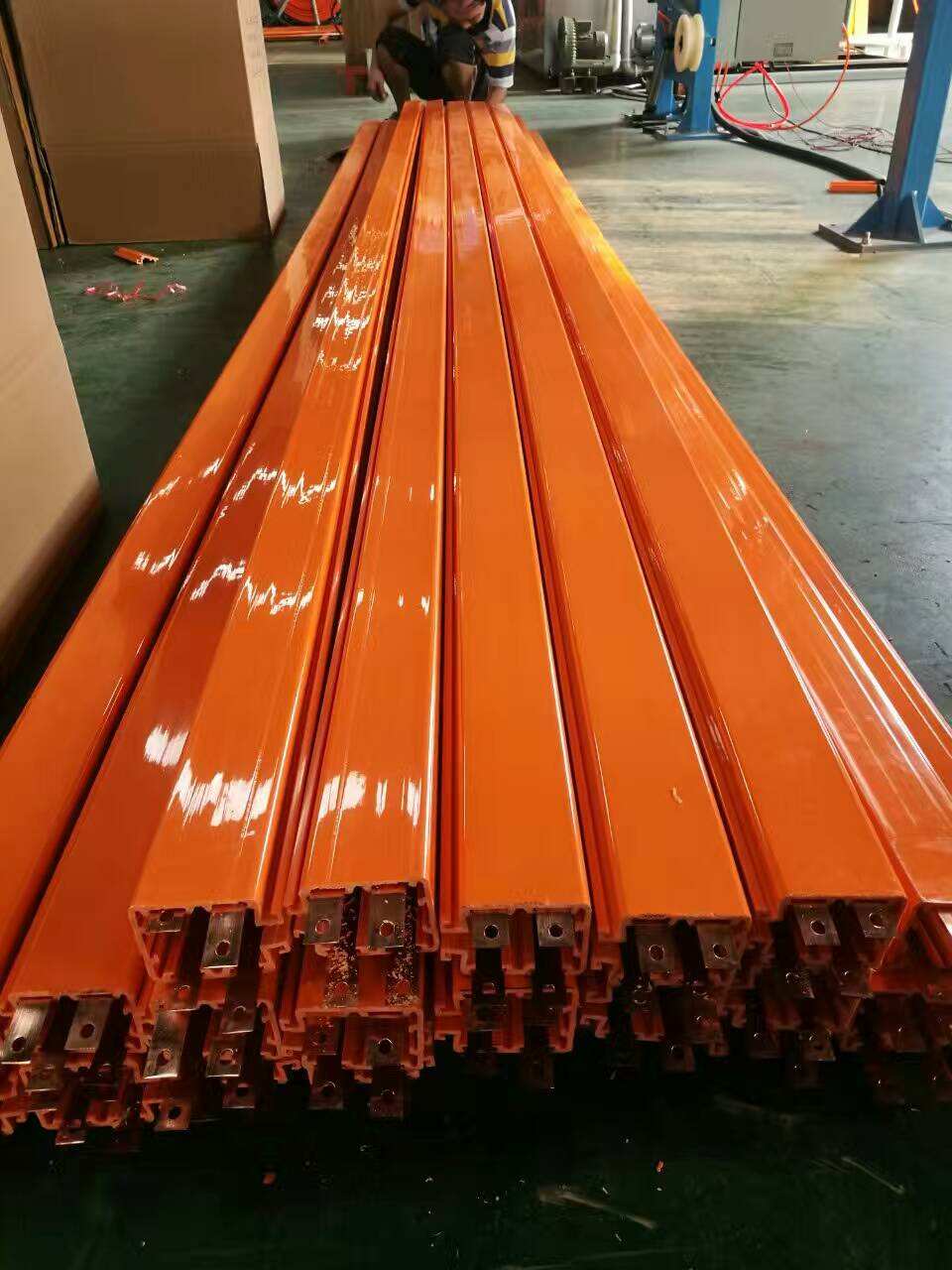
The sliding contact line is composed of an H-shaped aluminum alloy main body rail, a pressed V-shaped stainless steel sliding contact strip, a PVC insulating shell, an external current collector, and components such as suspension and fixing parts. Safe sliding contact line: Due to its novel design, reasonable structure, convenient maintenance, and safe use, this product is widely used in occasions with large currents, high frequency of use, fast operating speeds, and poor environments.
Sliding contact line detailed introduction:
The sliding contact line is an energy-saving type developed by learning from advanced foreign experience and combining with national conditions. It has safe and reliable mechanical and electrical properties, and is easy to install and maintain. The phase spacing is 80mm, the protective shell is made of two materials: engineering plastic and aluminum-plastic alloy, and the conductor is aluminum alloy (with embedded stainless steel strip) or pure copper. It is not affected by rain, snow, frost, and is suitable for harsh environments such as open air, water mist, acid mist, and conductive dust. For specifications below 300A, circles and arcs of various radii can be made according to user needs.
The sliding contact line is used to supply power to moving equipment. It consists of two parts: the slide rail (fixed part, connected to the power source, usually made of single lengths of 4m or 6m per piece connected together) and the current collector (sliding part, which can slide on or inside the slide rail and contact the copper strip to collect electricity, used to connect with the moving motor).
Sliding contact line quality can be measured according to the following standards:
1. Carbon brush service life--It is a consumable item, and the travel distance affects the equipment maintenance cycle.
2. Quality of the sliding contact line shell--Applicable temperature, environment, etc.
3. Performance of the current collector--Mainly from the service life of the wheels, the design of the turning wheels, and whether the current collector can be used in various environments.
4. Expansion problem of the sliding contact line--When the length exceeds 100 meters, expansion must be considered.
5. Voltage drop problem--The voltage drop varies according to the length of various copper strips.
1. Product structure: The sliding contact line consists of a guide rail, protective sheath, current collector, hanger, connector, fixing clamp, end cap, etc. According to user requirements, expansion sections (thermal compensation devices) and maintenance sections (isolators) can also be configured.
2. Guide rail and protective sheath: The guide rail is made of aluminum alloy profile with good conductivity and strong environmental adaptability (grade 6063, state T5). A "V"-shaped stainless steel groove is embedded in the lower part of the guide rail to ensure wear resistance, stability, and good contact when the current collector brush slides along the groove. The guide rail is generally fixed at 6 meters. The protective sheath is made of engineering plastic with toughness, wear resistance, anti-aging, and flame retardant properties, providing good insulation protection for the guide rail and ensuring personal safety.
3. Current collector: The current collector is a support-type structure and is the main component that supplies power to moving equipment. It consists of special carbon brushes, terminals or binding posts, plastic protective cover, support arm, etc. It applies appropriate contact pressure and slides smoothly along the guide rail to supply power to the equipment. When the equipment needs maintenance, the carbon brush of the current collector can be pulled away from the guide rail to cut off power, ensuring safety and convenient operation.
4. Connector (also serving as power supply): The connector is the end connection between guide rails, reliably connected by pressure plates and bolts, with an engineering plastic protective cover. The protective sleeve that also serves as a power supply can introduce the power incoming line at the port and is fastened together with the connector pressure plate and bolts.
5. Hanger, fixer, and end cap: The hanger is a special part for hoisting and fixing the sliding contact line guide rail. The fixer is a device that limits the guide rail at the bracket. When the guide rail expands or contracts due to temperature changes, it guides it to extend to both sides of the fixer. The end cap is installed at both ends of the guide rail for insulation protection. Both the hanger and the end cap are made of engineering plastic.
6. Expansion section (thermal compensation device): The expansion section is also called an expansion joint or thermal compensation device. It consists of connector pressure plates, compensation power supply aluminum plates or copper plates, leads, etc., with an engineering plastic shell. When the guide rail expands or contracts due to temperature changes, the expansion joint adjusts its gap to avoid deformation of the guide rail. Generally, when the workshop length exceeds 200 meters, one set is configured for every additional 100 meters.
7. Maintenance section (isolator): The maintenance section is made of connector pressure plates and high-strength insulating materials, with an engineering plastic shell as a protective sleeve. It is selected according to user needs and is mainly convenient for maintenance of sliding contact lines, moving equipment, etc.
Safe sliding contact line: Used in dusty, humid environments, can be equipped with dust-proof sealing strips and hand protection (hand protection is required when the sliding contact line is very close to people). The operating speed of the current collector is less than 300 meters/minute.
Note: The above information and technical parameters are compiled and released by Yangzhou Darui Electric Co., Ltd.