Crane Busbar
Darui Electric recommends
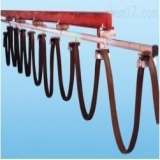
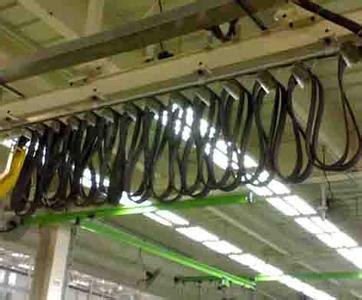
Crane busbar is a power transmission system used in most of our factories, ports, warehouses, and other places. Its main function is to provide power supply to mobile equipment such as cranes, electric hoists, and overhead cranes. The use of crane busbar requires detailed usage specifications and good usage habits. The material of crane busbar is mostly composed of insulating engineering plastics and copper or aluminum materials. The combination of materials depends on the power of the mobile equipment. Most low-power mobile equipment use multi-pole copper busbar made of engineering plastics and copper, while high-power mobile equipment usually use single-pole aluminum alloy busbar made of engineering plastics and aluminum, and power transmission is carried out through multi-line combinations. Different combinations also give them different characteristics, enabling them to be used in different environments, power levels, and occasions.
As the most important part of mobile power supply, its quality and correct usage habits are directly related to the working efficiency and safety of mobile equipment. When purchasing crane busbar, we must first confirm whether the busbar manufacturer is a regular manufacturer with complete procedures, whether it has a production license, and whether it has been inspected and approved by relevant national departments. Secondly, we need to clarify the required busbar model, which is related to factors such as the current, power, moving distance, and environment of the mobile equipment. We can combine the manufacturer's suggestions to choose the most suitable one to avoid unnecessary losses. During the use of the busbar, it is necessary to take measures such as anti-corrosion and moisture-proof for accessories, regularly check whether the busbar shell is damaged, twisted, or deformed, and whether the fixed brackets and connector nuts are loose. If the total length of the crane busbar exceeds 100 meters, consider adding expansion sections. Check whether the current collector of the crane busbar can fully contact the conductor and move smoothly on the busbar. Regularly check whether the carbon brush of the current collector is severely worn. If the worn area exceeds two-thirds, replace the carbon brush with a new one. If there are multiple mobile devices on one line, during the use of the crane busbar, try to start with low-power and low-current devices first, run for two minutes, then gradually start other devices, and so on until all devices are started. After all devices are started, make the equipment move at low speed, and the staff should observe the entire line to see if it can move smoothly and whether there is any possible friction with brackets or other equipment, so as to discover and solve problems as early as possible.
Note: The above information and technical parameters are compiled and released by Yangzhou Darui Electric Co., Ltd.